
Understanding Waste Management in Orienteering
Waste management is one of the most visible environmental challenges associated with sporting events. Orienteering, by its nature, is already among the most sustainable sports — it requires minimal permanent infrastructure, takes place in natural settings, and leaves a low footprint. However, this does not mean that waste generated before, during and after orienteering events should be ignored.
The International Orienteering Federation recognizes sustainability as one of the fundamental values of orienteering, promoting respect for the natural environment and environmental good practice (IOF, 2020). Waste reduction is a core part of that commitment.
The Waste Hierarchy: Reduce, Reuse, Recycle
The starting point for any waste management plan should be the waste hierarchy. The principle is simple: the best waste is the waste that is never generated. Only when reduction is not possible should reuse be considered, followed by recycling and composting as a last resort before landfill disposal (IOF Environment and Sustainability Commission, 2023).
Before the Event: Planning is Everything
Effective waste management begins long before the starting signal. Organizers should estimate the type and quantity of waste expected based on the number of participants and event format, develop a written waste management plan, choose vendors and caterers who use compostable or reusable materials, avoid single-use plastics wherever possible, and plan the number, type, and placement of waste stations according to expected foot traffic (Burda et al., 2023).
The guide Organising a Carbon-wise Event, developed around the experience of the Jukola relay, addresses waste management as one of its core topics, emphasizing timely planning, open communication, and continuous improvement as key principles (Carbon-wise Jukola Project / Posintra Ltd. / Aalto University, 2023).
During the Event: Sorting, Signage and Volunteers
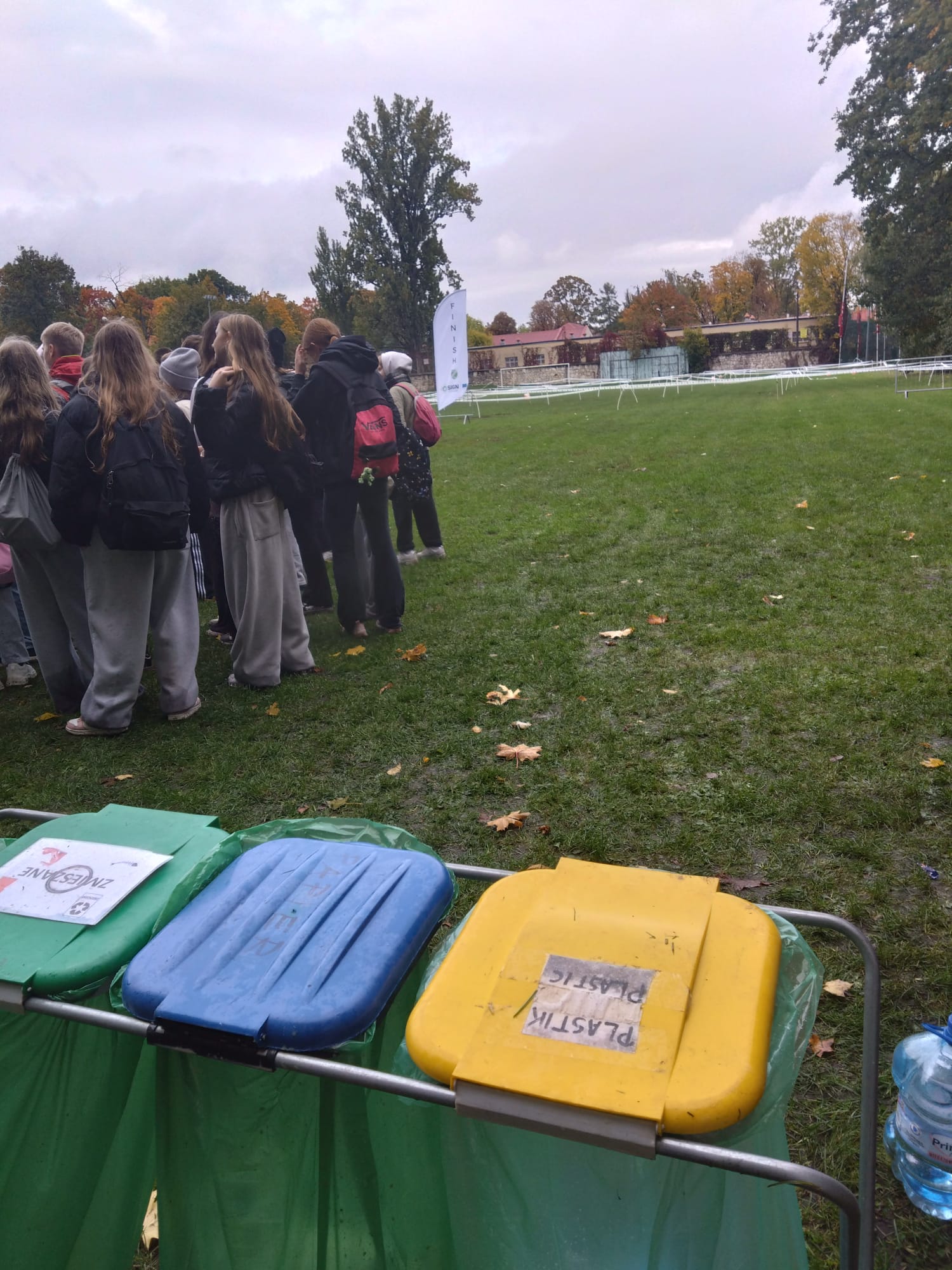
Even the best waste plan fails without clear communication and active engagement on the day. Organizers should place clearly labeled waste stations in high-traffic areas such as the arena, finish area, and catering zones, use color-coded bins and visual signage, and brief volunteers on waste management procedures. Volunteers play a crucial role in guiding participants to sort their waste correctly (Lanzendorf, Högemann and Margaryan, 2023). Participants should also be encouraged to bring their own reusable water bottles and cups, and water refill stations should be set up to reduce plastic bottle waste (IOF Environment and Sustainability Commission, 2023).
Food Waste: A Special Focus
Food waste deserves particular attention at orienteering events. Organizers should estimate catering quantities carefully to avoid overproduction, prioritize locally sourced food with minimal packaging, use compostable tableware, and arrange to donate or compost leftover food after the event (Burda et al., 2023). According to Lanzendorf, Högemann and Margaryan (2023), food waste can account for more than one third of the total waste stream at outdoor sporting events, making it a priority area for intervention.
After the Event: Measure and Learn
Post-event waste auditing is a valuable tool for continuous improvement. Organizers should record the total waste generated, the proportion diverted from landfill through recycling or composting, and any challenges encountered. This data can be shared with future organizers and contribute to the broader body of knowledge within the orienteering community (IOF Environment and Sustainability Commission, 2023).
Conclusion
Managing waste at an orienteering event is not just an environmental obligation — it is an opportunity to demonstrate the values of the sport and inspire participants to adopt more sustainable habits in their everyday lives. By planning ahead, choosing sustainable materials, engaging volunteers, and measuring results, organizers can make every event a positive example of sport in harmony with nature (Burda et al., 2023).
References
Burda, M. et al. (2023) Sustainable Orienteering Events: Orienteering in Harmony with Nature. Czech Orienteering Federation / IOF. Available at: https://orienteering.sport/iof/environment-and-sustainability/organising-a-carbon-wise-event-2/
Carbon-wise Jukola Project / Posintra Ltd. / Aalto University (2023) Organising a Carbon-wise Event. IOF. Available at: https://orienteering.sport/iof/environment-and-sustainability/organising-a-carbon-wise-event-2/
IOF (2020) New IOF Sustainability Policy. International Orienteering Federation. Available at: https://orienteering.sport/new-iof-sustainability-policy/
IOF Environment and Sustainability Commission (2023) Checklist and Guidelines for the Organisation of Sustainable Orienteering Events. International Orienteering Federation. Available at: https://orienteering.sport/iof/environment-and-sustainability/checklistandguidelines/
Lanzendorf, T., Högemann, H. and Margaryan, L. (2023) Review of Environmental Impacts of Outdoor Events with a Focus on Orienteering. MISTRA Sport & Outdoors. Available at: www.diva-portal.org
Funded by the European Union. Views and opinions expressed are however those of the author(s) only and do not necessarily reflect those of the European Union or EACEA. Neither the European Union nor the granting authority can be held responsible for them