
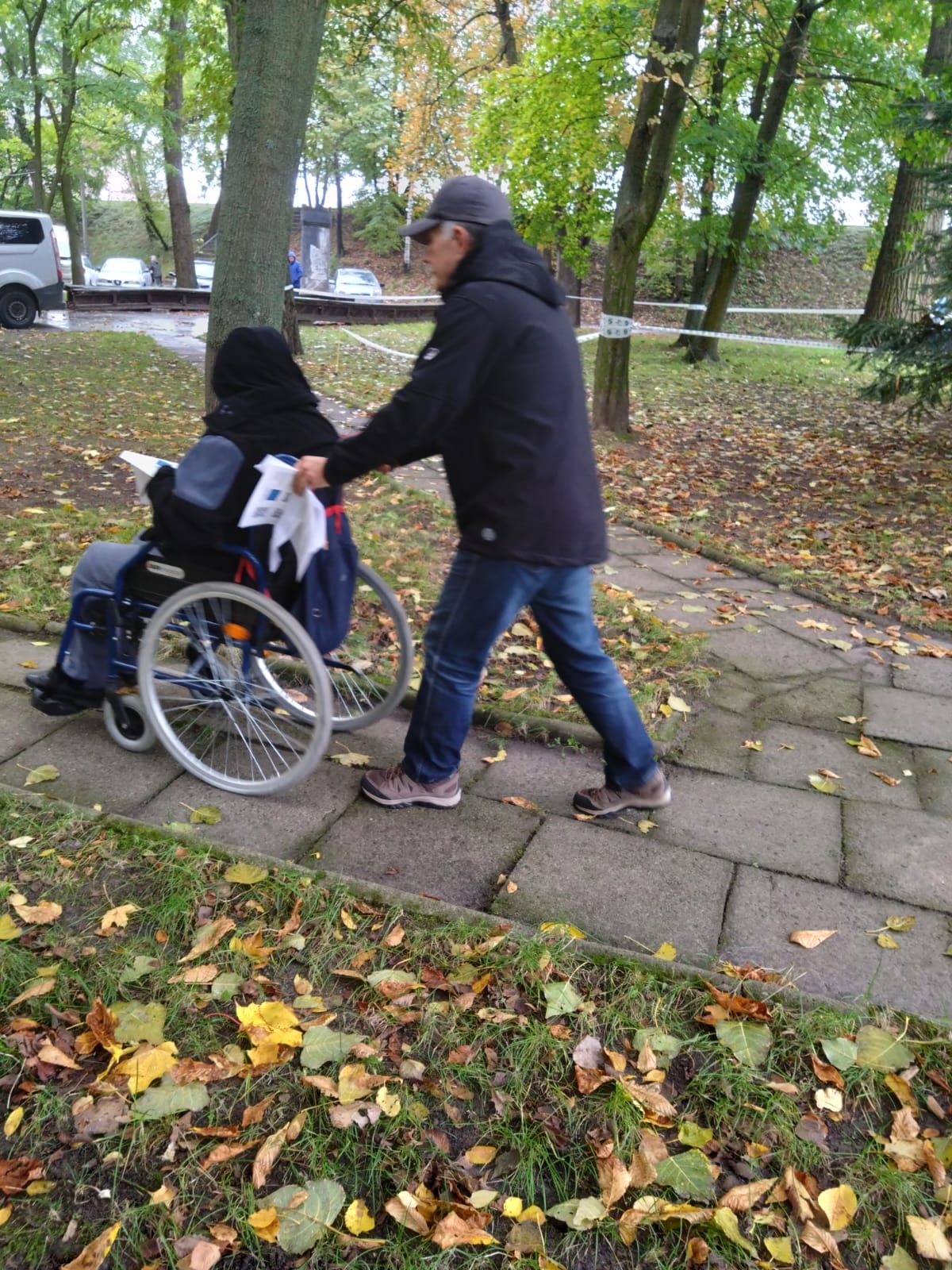
Within the European project O SIGN – “On: Sport in Nature, Good Nutrition and Young Hearts”, Trail Orienteering (Trail O) stood out as one of the most inclusive and accessible forms of orienteering, implemented across all five partner countries. Unlike traditional races focused on speed, Trail O emphasizes thinking, observation, and accuracy, offering equal opportunities for all participants.
What is Trail Orienteering?
Trail Orienteering is a discipline where participants follow an accessible route (usually along paths or park trails) and must determine, from a distance, which of several control points in the terrain correctly matches the location marked on the map.
Unlike other orienteering formats:
- speed is not a factor;
- participants can take their time to analyze (except for specific timed sections);
- the focus is on map reading, terrain interpretation, and correct decision-making.
This structure turns Trail O into a mental challenge rather than a physical one.
How it was implemented in O SIGN
Within O SIGN events, Trail Orienteering was organised in parks and accessible natural areas, allowing people of all ages and abilities to take part. Courses were carefully designed using detailed maps and technically precise control placements.
A key aspect was ensuring full accessibility for participants with disabilities, including wheelchair users. Routes were selected to allow smooth movement and equal participation conditions, without mobility-related disadvantages.
Key benefits of Trail Orienteering
1. True inclusion in sport
Trail O is one of the few disciplines where people with and without disabilities can compete directly under the same conditions.
2. Development of analytical thinking
Participants must compare the map with real terrain, observe fine details, and make accurate decisions, often in complex situations.
3. Suitable for all ages
Without the pressure of speed, the format is ideal for children, adults, and seniors alike.
4. Reduced physical barriers
The physical effort required is minimal compared to other formats, opening participation to a much wider audience.
5. Learning through observation and navigation
Participants improve concentration, attention to detail, and spatial awareness.
Results and impact
Competitions organised across the five partner countries attracted numerous participants, including:
- children and young people experiencing orienteering for the first time;
- older adults;
- people with disabilities, who were able to take part in adapted and fair conditions.
Through this format, the project demonstrated that orienteering can truly be accessible to everyone, regardless of physical ability.
Conclusion
Trail Orienteering, as implemented in the O SIGN project, represents a strong model of inclusive sport. By focusing on precision and thinking rather than physical performance, it opens orienteering to a diverse audience and promotes key European values such as equality and accessibility.
Its success across all five partner countries highlights its strong potential as a tool for social inclusion and active participation in outdoor sport.
Funded by the European Union. Views and opinions expressed are however those of the author(s) only and do not necessarily reflect those of the European Union or EACEA. Neither the European Union nor the granting authority can be held responsible for them