
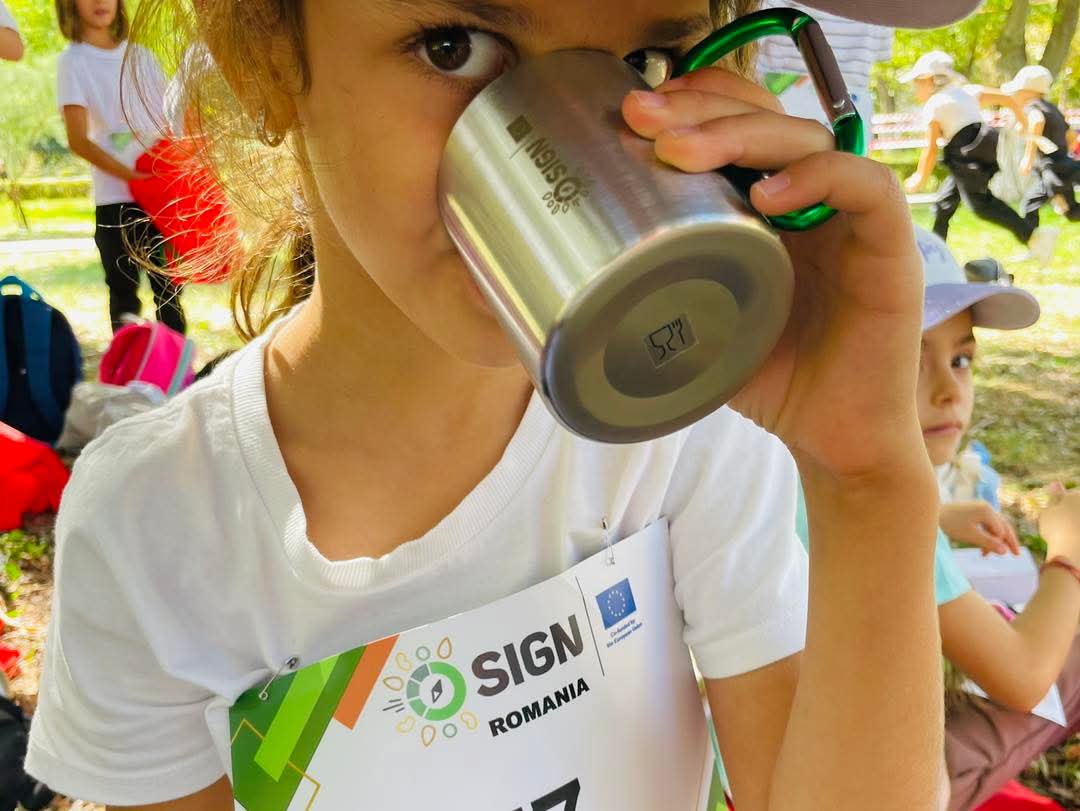
Beyond bringing people together through outdoor sport, the European project O SIGN – “On: Sport in Nature, Good Nutrition and Young Hearts” placed strong emphasis on nutrition education as a key pillar of health, wellbeing, and long-term active living.
Across the five partner countries, O SIGN delivered five in-person nutrition workshops, complemented by two international webinars, creating an educational dimension that extended the project’s impact far beyond the finish line. Participants were encouraged not only to move more, but also to better understand how informed food choices, proper hydration, and balanced nutrition support health, recovery, energy, and physical performance at every age.
The educational programme focused on practical, science-based topics that proved relevant for beginners, recreational athletes, performance-oriented participants, parents, coaches, and anyone interested in healthier living.
Topics explored and why they matter
1. Why Nutritional Needs Differ Between Genders: Supporting Performance at Any Age
This topic explored how biological differences influence metabolism, body composition, hormonal balance, nutrient absorption, and energy needs throughout life.
Understanding these differences is important because nutrition recommendations are often presented in general terms, while in reality women and men may have different needs in terms of iron, protein, hydration, caloric intake, and recovery nutrition, depending on age, activity level, and physiological stage.
By better understanding these differences, participants gained practical insight into how nutrition can more effectively support both everyday wellbeing and physical performance.
2. Balanced Nutrition for a Healthy Heart and Living
This workshop focused on one of the most important foundations of lifelong health: cardiovascular wellbeing.
Participants explored how balanced eating habits—rich in whole foods, vegetables, fruits, fibre, healthy fats, and appropriate nutrient timing—can help reduce long-term health risks while supporting daily energy levels.
The topic resonated strongly because it connected nutrition not only to sport performance, but to quality of life, disease prevention, healthy aging, and long-term vitality.
3. Personalized Nutrition for Recreational and Performance Sports
One of the clearest lessons shared in O SIGN was that there is no universal “perfect diet” for everyone.
Nutrition must be adapted to:
- personal goals,
- age,
- physical activity level,
- recovery demands,
- body composition,
- lifestyle and health profile.
This topic was particularly valuable because it helped participants understand that what works for one athlete—or what is promoted online—may not be suitable for another person.
Personalized nutrition supports not only better performance, but also better recovery, improved consistency, and healthier long-term habits.
4. Optimal Hydration as Part of Healthy Living: Recommendations for Amateur and Professional Athletes
Hydration proved to be one of the most underestimated aspects of healthy living discussed in O SIGN.
Participants learned that proper hydration affects:
- physical endurance,
- cognitive performance,
- body temperature regulation,
- muscle function,
- recovery,
- and even mood and concentration.
The workshops highlighted that dehydration does not only affect athletes in competition—it can reduce daily performance at school, at work, and in everyday life.
Understanding hydration means understanding one of the simplest but most powerful tools for health.
5. Food vs Supplements in Sports: Recommendations for Amateur and Professional Athletes
This topic generated some of the most lively discussions.
Participants explored an increasingly relevant question: Should performance and health primarily come from food, or are supplements necessary?
The educational message was clear: in most situations, a balanced diet remains the foundation, while supplements should be used thoughtfully, based on real needs, evidence, and professional guidance—not marketing trends.
This was especially important in a world where social media often promotes shortcuts, miracle products, and unverified claims.
How the workshops were experienced in O SIGN
Participation in the nutrition workshops quickly became much more than simply listening to presentations. They turned into open, honest, and highly interactive conversations.
One striking observation was that participants across different countries often arrived with a shared pool of nutrition myths—ideas picked up from the internet, social media influencers, hearsay, or contradictory articles online. Although these beliefs varied in detail, the confusion was remarkably similar regardless of nationality.
Questions repeatedly emerged around:
- protein intake,
- supplements,
- sugar and carbohydrates,
- hydration strategies,
- meal timing,
- weight management,
- and “miracle” foods claimed to boost health or performance.
This clearly showed how important it is for people to have access to well-documented, evidence-based, professionally validated information.
Parents, in particular, asked thoughtful and often emotional questions about how best to support the nutrition of their adolescent children, especially during periods of rapid growth, school demands, and increasing sports participation. Many expressed uncertainty about what is truly healthy versus what is simply popular online.
A clear message emerged from all workshops and webinars: there is a strong need for nutrition education—across all countries, across all ages, and especially among young people, who are growing up in an environment flooded with information, but not always with knowledge.
A lasting impact beyond sport
The nutrition workshops and webinars became an essential part of the O SIGN experience, reinforcing the project’s holistic vision: healthy hearts are built not only through movement in nature, but also through informed daily choices about food, hydration, and lifestyle.
By combining outdoor activity, community connection, and accessible health education, O SIGN helped build stronger foundations for healthier European communities—communities that are active, informed, and empowered to make better choices for life.
Funded by the European Union. Views and opinions expressed are however those of the author(s) only and do not necessarily reflect those of the European Union or EACEA. Neither the European Union nor the granting authority can be held responsible for them