
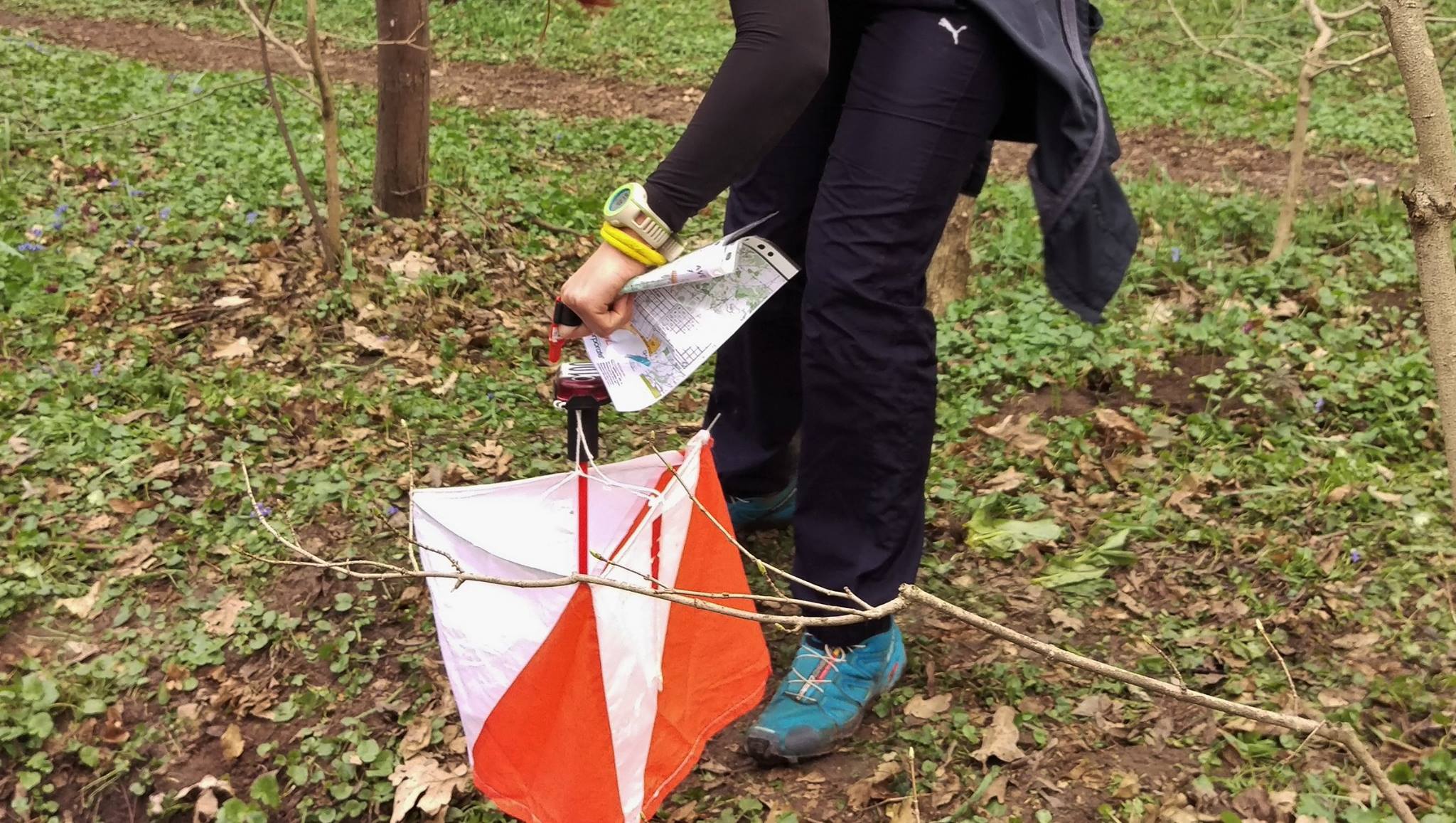
Among outdoor sports, orienteering occupies a distinctive niche: you run or walk between control points, but the real constraint is cognitive—interpreting a detailed map, orienting it, estimating time and distance, choosing a route, and correcting mistakes in real time. At first glance it may resemble trail running or trekking; in reality, it is an “ecological” example of integration between physical effort and a mental task, with potentially specific effects on brain health and psychological well-being.
1) The physiological “engine”: irregular endurance
From a cardiovascular perspective, orienteering falls within endurance sports: the aerobic component is predominant, but it alternates with more intense phases (climbs, changes of direction, accelerations after a route choice). A systematic review describes this intermittent profile and highlights that performance depends both on physical fitness and on the ability to manage the cognitive load of navigation (attention, anticipation, simplification of choices).
For public health, the core message remains that of regular physical activity: the WHO recommends at least 150–300 minutes per week of moderate aerobic activity for adults (or an equivalent amount of vigorous activity), reminding us that “every movement counts.”
2) The cognitive “software”: training spatial skills
The difference from other outdoor sports becomes clear when we look at cognitive functions. Orienteering forces athletes to maintain a mental representation of space, mentally rotate the map, shift between egocentric references (“where am I?”) and allocentric ones (“how are places arranged relative to each other?”), distribute attention between terrain and symbols, inhibit wrong shortcuts, and update the action plan.
This is not just theory: in a study of adults of different ages, expert orienteers reported greater use of spatial strategies and better spatial memory than physically active controls, even after controlling for age, sex, and general physical activity level.
This is crucial in comparison: walking or running in nature mainly trains the cardiovascular system and muscles; orienteering adds a “specific cognitive stimulation” that, in intensity and continuity, resembles problem solving in motion.
3) Ecological dual-tasking: why combining body and brain may matter
Part of the research on cognitive aging suggests that programs combining physical stimulation with a mental task can provide advantages (on average small but measurable) for certain executive functions compared with “single-domain” interventions, although results vary across studies.
Orienteering is a natural dual-task: it does not add an abstract puzzle, but a spatial decision embedded in action. In an experiment with young adults, a single vigorous orienteering session (with navigation) increased BDNF and selectively improved spatial memory compared with vigorous exercise without navigation; this suggests that the orientation component may “channel” benefits toward spatial processes.
Supporting the neurobiological rationale, navigation training studies (in experimental tasks) show that regular, demanding stimulation can preserve hippocampal volume/integrity markers over time compared with controls, consistent with the idea of trainable plasticity.
It should also be noted that dual-tasking is not always “easier”: in a crossover study, moderate-intensity orienteering produced a rise in salivary cortisol (neuroendocrine activation) compared with a 5 km run, while still improving some reaction times in cognitive tests. In practice: more mental stimulation often means higher acute arousal—requiring adequate recovery.
4) Mental health: nature, yes—but also meaning
Many outdoor sports share an environmental advantage: exercising outdoors can be associated with more favorable psychological outcomes than indoor activity, even if study quality is uneven.
Meta-analyses on “green exercise” find an average benefit for mental well-being compared with inactivity; comparisons with indoor or urban exercise are more nuanced and depend on duration, environmental quality, and measurement tools.
Here, orienteering adds a specific psychological ingredient: perceived competence (“I understand the map”), autonomy (I choose the route), and a progressive goal (finding checkpoints). In clinical practice and prevention, these elements often make the difference between “doing sport for a month” and building a sustainable habit.
5) Quick comparison with other outdoor sports
- Trail running / trekking: excellent for heart health and mood; cognitive demand may exist, but is often guided by the trail rather than continuous map-based decisions.
- Off-road cycling: high attentional and technical load; less centered on large-scale cartographic representation.
- Cross-country skiing and gliding sports: outstanding aerobic and coordinative stimulus; navigation is not the dominant component.
Orienteering stands out because it makes orientation a systematic, repeated, and measurable form of training.
6) Precautions: making the load sustainable
Benefits do not eliminate risks: uneven terrain and pace changes increase stress on ankles and knees; moreover, cognitive load can become excessive if one starts with courses that are too difficult. The literature emphasizes the coexistence of high physical and cognitive demands: progression (simple courses, controlled environments, adequate recovery time) and basic technique are part of injury prevention.
In summary
If trail running and trekking are powerful “medicine” for the body and mood, orienteering adds a rare active ingredient: training spatial navigation under real-world conditions. It is not only moving in nature—it is thinking in space while moving through space.
Bibliography
Bull, F. C., Al-Ansari, S. S., Biddle, S., Borodulin, K., Buman, M. P., Cardon, G., … & Willumsen, J. F. (2020). World Health Organization 2020 guidelines on physical activity and sedentary behaviour. British Journal of Sports Medicine, 54(24), 1451–1462. https://doi.org/10.1136/bjsports-2020-102955
Chaput, J.-P., Willumsen, J., Bull, F., Chou, R., Ekelund, U., Firth, J., … & Katzmarzyk, P. T. (2020). 2020 WHO guidelines on physical activity and sedentary behaviour for children and adolescents aged 5-17 years: Summary of the evidence. International Journal of Behavioral Nutrition and Physical Activity, 17, Article 141. https://doi.org/10.1186/s12966-020-01037-z
Gomez-Isla, A., & Mayolas-Pi, C. (2015). Orienteering: Spatial navigation strategies and cognitive processes. Journal of Human Sport and Exercise, 9(Proc1), S507–S514. https://doi.org/10.14198/jhse.2014.9.Proc1.38
Liu, J., Liu, Y., & Wu, L. (2024). Exploring the dynamics of prefrontal cortex in the interaction between orienteering experience and cognitive performance by fNIRS. Scientific Reports, 14, Article 14382. https://doi.org/10.1038/s41598-024-65747-1
Mekni, R., Baklouti, S., & Souissi, N. (2025). The effectiveness of orienteering exercise on improving physical fitness and cognitive functions: A systematic review and meta-analysis. Public Health, 226, 145-154. https://doi.org/10.1016/j.puhe.2024.11.012 (Nota: Ho rintracciato gli autori corretti e la rivista effettiva, che è Public Health su ScienceDirect).
Paivio, E. (n.d.). The impact of orienteering on the development of cognitive skills and mental health: An analysis of student perceptions. Journal of Sport and Kinetic Movement. https://jskm.ro/images/pdfs/44volII/THE-IMPACT-OF-ORIENTEERING-ON-THE-DEVELOPMENT-OF-COGNITIVE-SKILLS-AND-MENTAL-HEALTH-AN-ANALYSIS-OF-STUDENT-PERCEPTIONS.pdf
Waddington, E. E., & Heisz, J. J. (2023). Orienteering combines vigorous-intensity exercise with navigation to affect cognition and BDNF. PLOS ONE, 18(1), Article e0281260. https://doi.org/10.1371/journal.pone.0281260 (Nota: Questi sono gli autori dell’articolo PLOS ONE che avevi indicato come anonimo).
World Health Organization. (2020). WHO guidelines on physical activity and sedentary behaviour. World Health Organization. https://www.who.int/publications/i/item/9789240015128
Funded by the European Union. Views and opinions expressed are however those of the author(s) only and do not necessarily reflect those of the European Union or EACEA. Neither the European Union nor the granting authority can be held responsible for them