
Over recent decades, scientific literature has progressively broadened its view of sport beyond traditional physical benefits, highlighting its role as a context for social and cognitive development. Disciplines that integrate movement, problem solving, and collective interaction represent one of the most fruitful areas for understanding how physical activity can promote psychological well-being and relational skills. In this perspective, team orienteering—namely orienteering practiced in groups—offers a particularly interesting model for analyzing how sport and group dynamics influence one another.
Orienteering: A Balance Between Body and Mind
Orienteering is a running discipline focused on navigation across natural terrain, in which athletes use maps and a compass to reach specific control points in the shortest possible time. From a physical standpoint, recent studies indicate that orienteering enhances high aerobic capacity, agility, and motor adaptation to variable terrains, with energy demands comparable to other endurance activities.
From a cognitive standpoint, orienteering involves an intense load of decision-making, spatial attention, and visuoperceptual skills, as participants must rapidly interpret geographical information and adapt their route plan in real time.
Social and Group Benefits of Team Orienteering
When orienteering takes place within a team sport context, its potential benefits expand to include communicative, leadership, and social cohesion dimensions. While individual orienteering highlights personal skills, team practice requires positive interdependence—namely the awareness that collective performance surpasses and integrates that of each individual athlete.
An educational document from the European Union explicitly emphasizes how orienteering can be used for team-building and problem-solving activities, underlining that this discipline promotes collaboration, communication, and critical thinking among participants. This pedagogical model is consistent with the aims of sport psychology as a scientific discipline, which investigates not only the improvement of individual performance but also relational and cognitive processes within groups.
Effective Communication Under Environmental Stress
During a team orienteering event, teams face situations in which rapid decision-making and information sharing become central. The very nature of the activity—navigating in a natural environment under physical and cognitive stress—requires each member to express and interpret signals clearly and promptly. Communication in these contexts is therefore not only tactical but also strategic, as it allows teams to negotiate alternative routes, allocate tasks, and overcome interpersonal conflicts.
Sport psychology has long recognized the central role of communication in group settings: it is not merely the transmission of information but a dynamic process that regulates relationships, motivation, and social cohesion.
Distributed Leadership and Collective Responsibility
In team orienteering, traditional leadership—characterized by a single stable leader—tends to shift toward a dynamic and situational model. In literature on group formation and social dynamics, a distinction is often made between formal leadership and functional leadership: the latter emerges when decisions are made in relation to the specific skills required by a contingent task.
The nature of orienteering demands that the person with greater competence in map reading or who is more effective in managing group resources temporarily assumes decision-making roles. This fosters a form of shared leadership that values individual differences within the team.
This distributed leadership is not only an operational advantage: it also accelerates collective responsibility and mutual trust, two characteristics closely linked to a group’s ability to work effectively and sustainably.
Building Cohesion and Social Well-Being
Numerous studies in social psychology and communication highlight how participation in group sports encourages prosocial behaviors, reduces perceptions of isolation, and strengthens the sense of belonging to a community. Although much of the literature refers to traditional team sports, the general principles of relational processes also apply to less conventional activities such as orienteering.
Furthermore, the natural environment amplifies these effects: many studies suggest that exposure to nature is associated with reduced psychological stress, improved emotional regulation, and increased perceived well-being.
Conclusion
In summary, team orienteering represents an exemplary model of how sport can serve as a training ground not only for physical skills but also for social, cognitive, and relational competencies. The combination of movement, navigation, communication, and group dynamics provides a privileged field of study for understanding how sporting experiences can contribute to the development of key skills such as:
- effective communication,
- situational leadership,
- teamwork,
- social cohesion,
- collective problem solving.
Promoting disciplines such as team orienteering therefore means not only encouraging active lifestyles but also providing concrete tools to strengthen the social and psychological competencies that are fundamental to individual and collective well-being in contemporary society.
Bibliography
Andersen, M. H., Ottesen, L., & Thing, L. F. (2019). The social and psychological health outcomes of team sport participation in adults: An integrative review of research. Scandinavian Journal of Public Health, 47(8), 832–850. https://doi.org/10.1177/1403494818791405
Carron, A. V., Brawley, L. R., & Widmeyer, W. N. (1998). Group cohesion in sport and exercise. Journal of Sport & Exercise Psychology, 20(2), 119–133. https://doi.org/10.1123/jsep.20.2.119
Cotterill, S. (2020). Team psychology in sports: Theory and practice (2nd ed.). Routledge.
Eime, R. M., Wade, T. J., Pankowiak, A., & Harvey, J. T. (2023). The impact of sports participation on mental health and social outcomes in adults: A systematic review and the ‘Mental Health through Sport’ conceptual model. Systematic Reviews, 12, Article 102. https://doi.org/10.1186/s13643-023-02264-8
European School Education Platform. (2024). Using orienteering for team building and problem-solving activities. European Commission. https://school-education.ec.europa.eu/en/professional-development/courses/using-orienteering-team-building-and-problem-solving-activities
Harvard Health Publishing. (2023, July 10). Orienteering: Great exercise and better thinking skills? Harvard Health Blog. https://www.health.harvard.edu/blog/orienteering-great-exercise-and-better-thinking-skills-202307102953
Mutz, M., & Müller, J. (2016). Mental health benefits of outdoor adventures: Results from two pilot studies. Journal of Adolescence, 47, 1–10. https://doi.org/10.1016/j.adolescence.2016.03.009
Orienteering. (2025, February 1). In Wikipedia. https://it.wikipedia.org/wiki/Orienteering
Riisla, K., Romero, C., & Reyes-Bossio, M. (2025). The role of sports psychology in enhancing team cohesion and performance. TPM – Testing, Psychometrics, Methodology in Applied Psychology, 32(S2), 2236–2245.
Sport psychology. (2025, February 1). In Wikipedia. https://en.wikipedia.org/wiki/Sport_psychology
Team building. (2025, February 1). In Wikipedia. https://it.wikipedia.org/wiki/Team_building
Wang, H., & Liu, S. (2025). The effectiveness of orienteering exercise on improving physical fitness and cognitive functions: A systematic review and meta-analysis. Sports Medicine. [Advance online publication]. https://doi.org/10.1007/s40279-024-02100-x
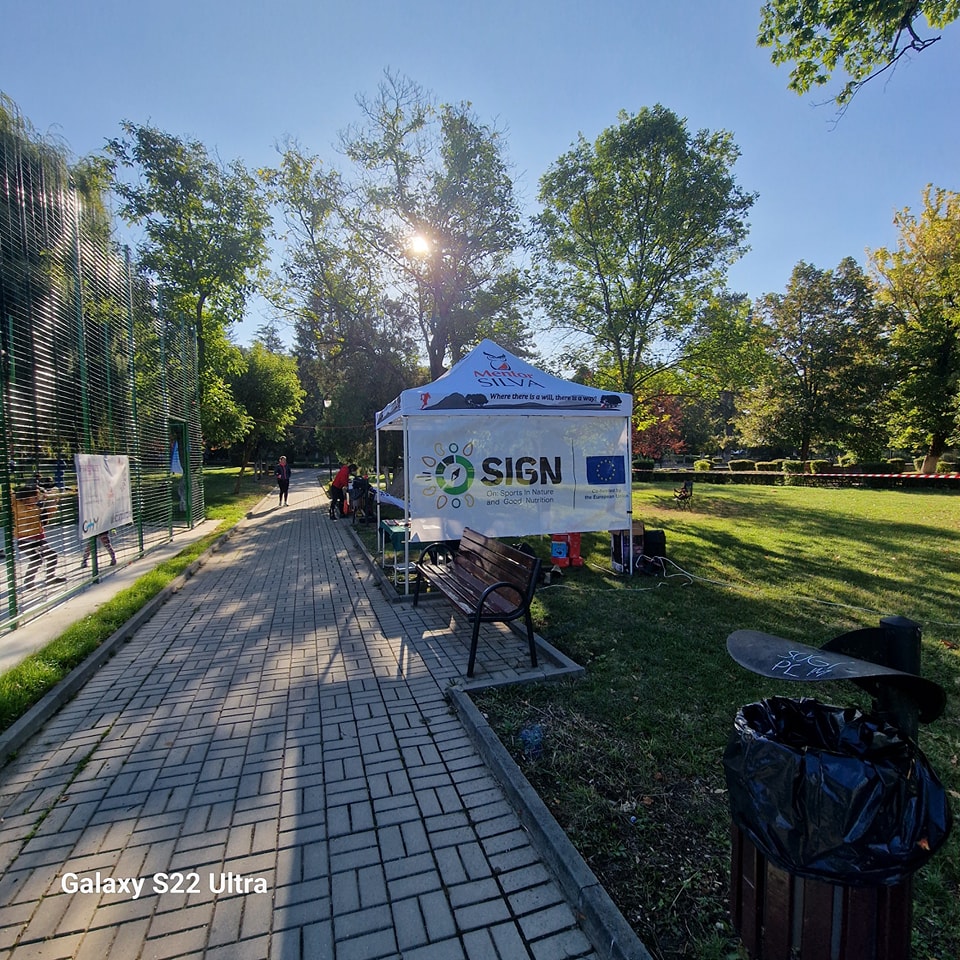
Funded by the European Union. Views and opinions expressed are however those of the author(s) only and do not necessarily reflect those of the European Union or EACEA. Neither the European Union nor the granting authority can be held responsible for them