
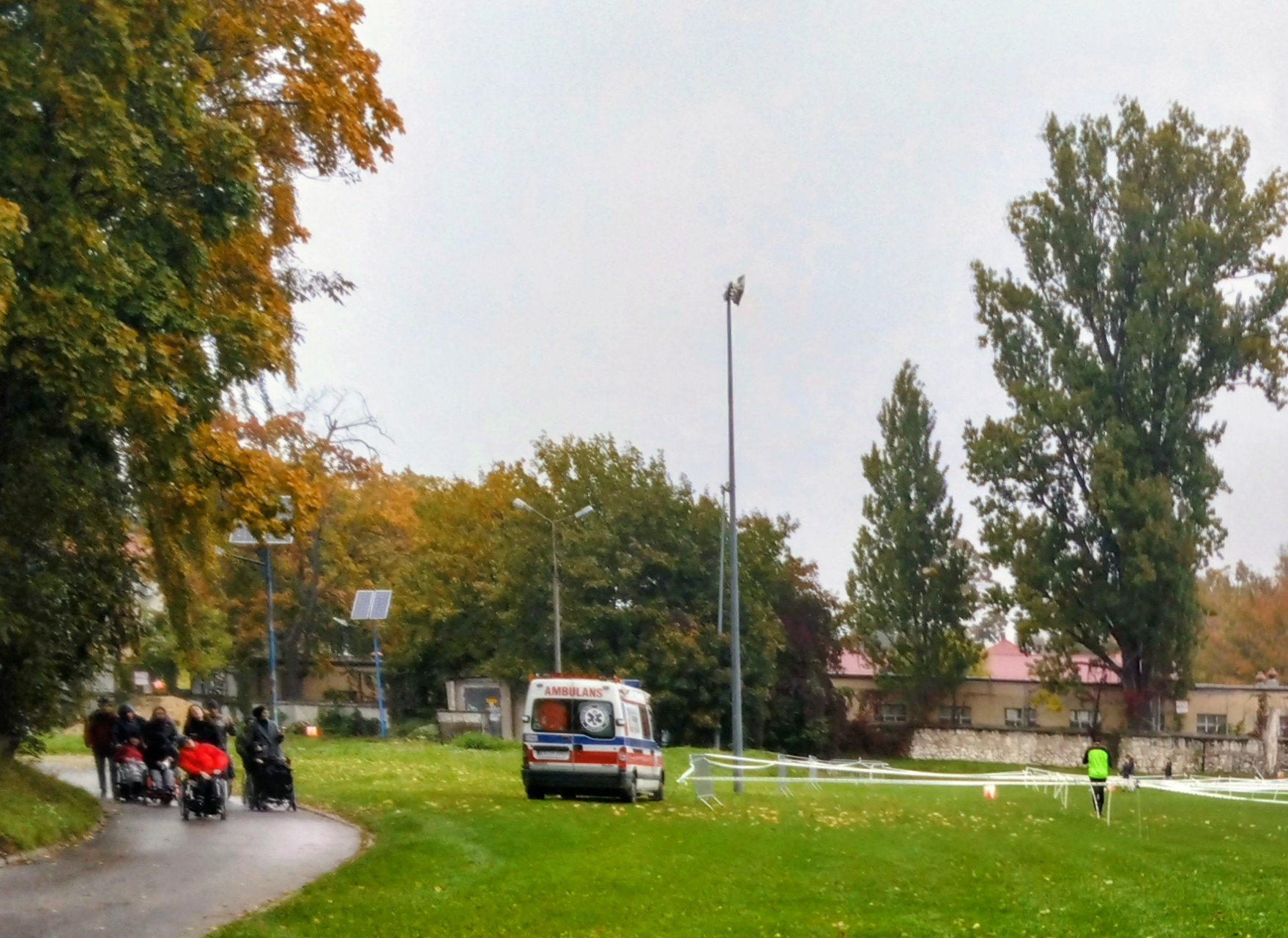
Orienteering is a sport that initially developed as a recreational and competitive activity. In recent years, however, its potential in the fields of health prevention, rehabilitation, and psychological therapy has been increasingly emphasized. By combining physical activity, cognitive challenges, contact with nature, and social interaction, orienteering offers a unique, multidimensional intervention for the human body, forming the basis of a holistic therapeutic approach.
Physical activity plays a key role in rehabilitation processes, contributing to improvements in physical fitness, motor coordination, and balance. Orienteering can be adapted to a patient’s capabilities—from simple routes in urban parks and open areas to more complex tasks in forests or indoor environments.
Motor training improves the efficiency of the musculoskeletal system and supports the restoration of physical capacity after injuries.
Coordination and balance are enhanced as varied terrain stimulates the nervous system and supports the development of motor skills.
The flexibility of different variants—such as walking orienteering, radio orienteering, ski orienteering, canoe orienteering, group formats, traditional courses, or routes specially adapted for people with physical disabilities (precision orienteering)—further broadens its applicability.
Orienteering can be an attractive alternative to traditional forms of rehabilitation exercises, which are often monotonous and discouraging. During such activities, “time passes quickly,” engaging not only the muscles but also the brain simultaneously, which helps divert attention from discomfort or reluctance toward therapy. Cognitive effort can shift focus away from physical exertion or pain-related discomfort.
Literature in sports psychology and occupational therapy highlights the importance of activity in nature for mental health. Orienteering, as an activity requiring concentration and rapid decision-making, can:
• reduce stress, tension, and emotional strain through contact with nature, detachment from everyday stimuli, and physical exertion;
• develop mindfulness due to the need for full focus on the map, surroundings, and one’s own actions;
• strengthen self-esteem and a sense of agency through independently completing routes, making decisions, and solving spatial problems;
• facilitate social integration—it is a sport for everyone, from professionals to entire families, and can be practiced in groups (e.g., relay races), promoting cooperation, communication, and relationship building.
For these reasons, orienteering shows potential application in the therapy of anxiety disorders, depression, as well as in resocialization programs and addiction treatment.
There is a growing search for therapeutic methods that go beyond the framework of traditional office-based psychotherapy. Orienteering can be incorporated into:
• group therapy, supporting the development of cooperation skills and mutual support;
• youth programs, fostering social competencies such as stress management and responsibility for oneself and the group;
• addiction treatment interventions, creating opportunities to experience success and failure, to be alone with oneself under controlled conditions, to take on constructive challenges, and to assume responsibility for one’s decisions and mistakes;
• psychiatric rehabilitation, serving as a form of physical and social activation for people with chronic mental, neurological, or intellectual disorders, as well as a form of self-therapy.
In the context of mental health, this activity promotes mindfulness, stress reduction, and problem-solving skills, and when practiced in groups, it can contribute to increased self-esteem and social interaction. These characteristics align with contemporary experiential and nature-based therapies.
Orienteering represents an innovative and engaging form of therapeutic support for rehabilitation and the treatment of mental health disorders. Its greatest value lies in the combination of movement, cognitive stimulation, and contact with nature. However, further empirical research is necessary to determine the scope and conditions for the effective application of this method in clinical practice. Despite its promising prospects, challenges remain, such as the need to increase the number of specialized instructors, ensure access to properly prepared (mapped) terrain, and invest in new supporting technologies, including computer programs and electronic organizational systems. Orienteering thus constitutes an innovative and engaging complement to conventional therapeutic practices, with significant potential for integration into rehabilitation and mental health care programs.
Bibliography:
Pawłucki, A. Physical activity as an element of psychological therapy. Kultura Fizyczna, 2010, pp. 15–22.
Szpunar, M. Occupational therapy in psychiatry – new directions of development. Psychiatria Polska, 2016, pp. 387–397.
Neuman, A. Orienteering as a pedagogical tool for experiential learning. Journal of Adventure Education and Outdoor Learning, 2019, pp. 207–219.
Funded by the European Union. Views and opinions expressed are however those of the author(s) only and do not necessarily reflect those of the European Union or EACEA. Neither the European Union nor the granting authority can be held responsible for them